Leica M-A (Typ 127) – The Mechanical Endpoint of the Leica M System
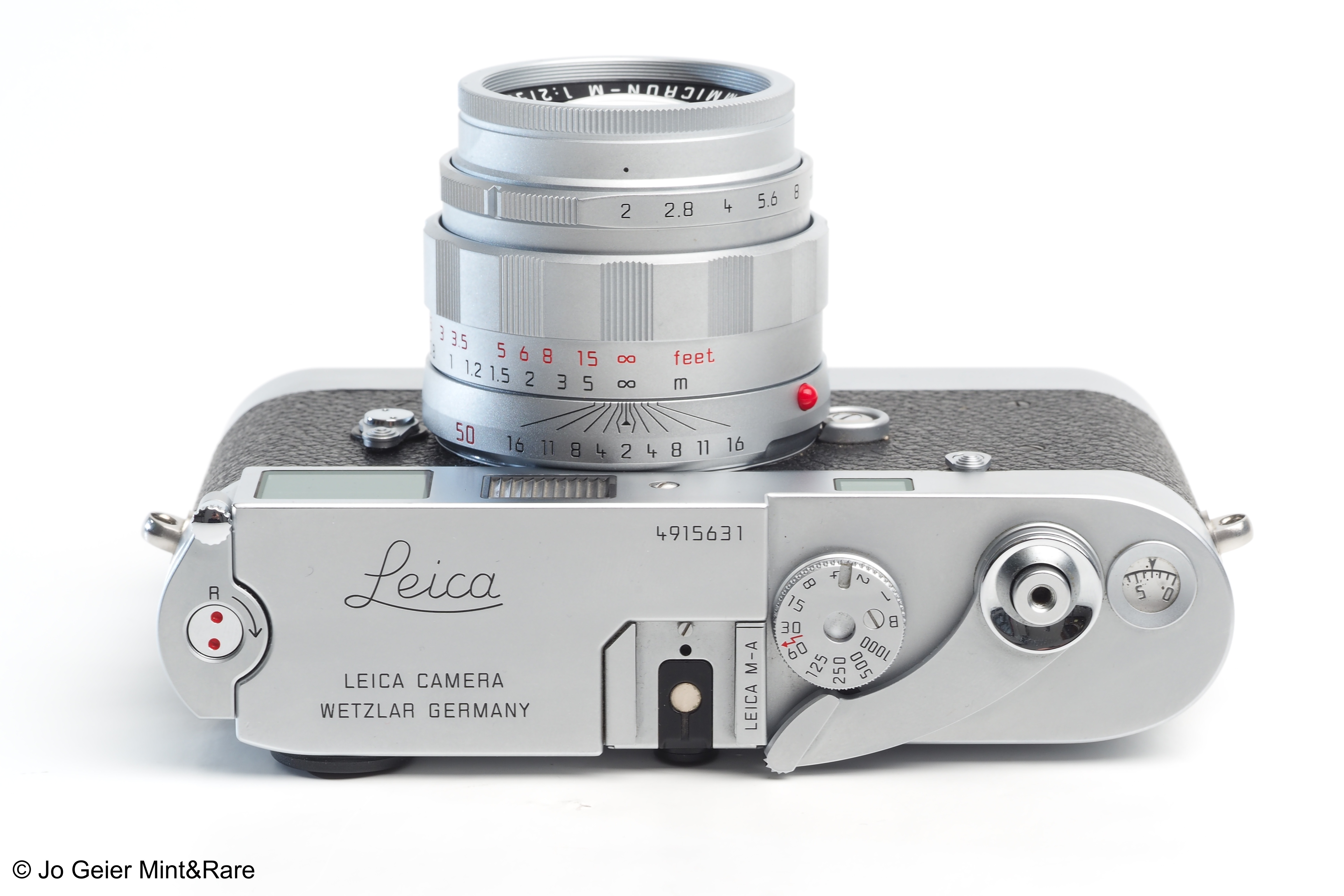
The Leica M-A was introduced in 2014, exactly 60 years after the Leica M3. At a time when Leica’s M system had already moved heavily into digital territory, the M-A quietly went in the opposite direction.
It is one of the very few modern Leica M cameras that does not include any form of exposure metering and does not require a battery to function.
Everything inside the camera is mechanical. Shutter speeds, film advance, rewind — all of it works without electronics. In practical terms, the M-A feels closer in concept to a late Leica M2 or early M4 than to any modern M body, although internally it is based on the Leica MP platform introduced in 2003.
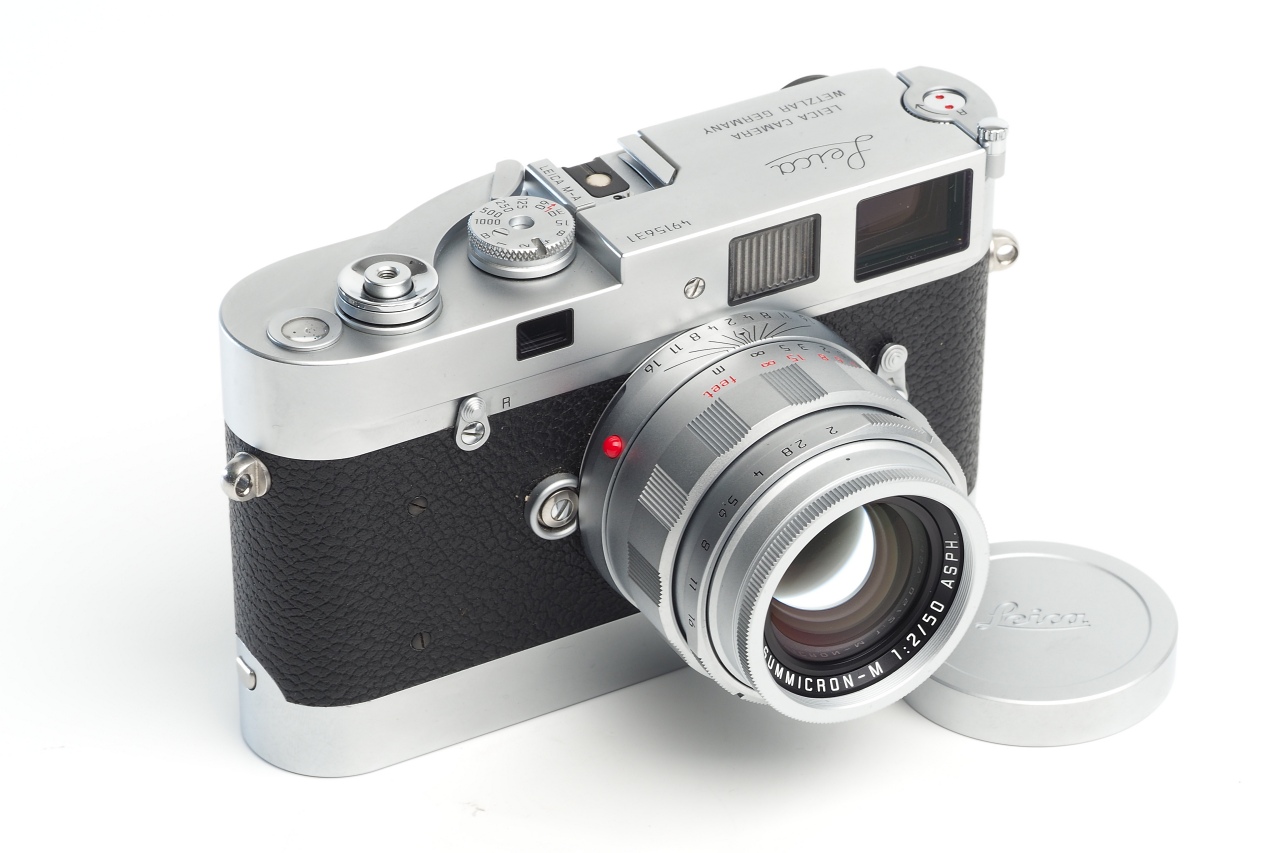
© Jo Geier Mint&Rare: Leica M-A with aditional rewind crank
Mechanical Construction
The camera uses the same mechanical cloth focal plane shutter as the MP, with speeds from 1 to 1/1000 second plus bulb mode. The rangefinder has a 0.72x magnification and displays framelines for 28/90mm, 35/135mm and 50/75mm lenses.
Unlike older Ms, the finder optics are multi-coated, which significantly reduces flare — something many users notice immediately when comparing it to pre-2000 models.
Film loading follows the M4 quick-load system, so there is no removable take-up spool. The film advance lever is the single-piece M3-style design, and the rewind is done via a pull-up knurled knob instead of the faster crank introduced with the M4.
Leica M-A vs Leica MP
Compared to the Leica MP, the most obvious difference is the complete removal of the exposure meter. There are no LEDs in the viewfinder and no battery compartment on the front plate.
For photographers who meter externally or rely on experience, this simplifies the camera considerably and removes one of the few electronic components that may eventually require attention in long-term ownership.
Internally, both cameras remain very similar.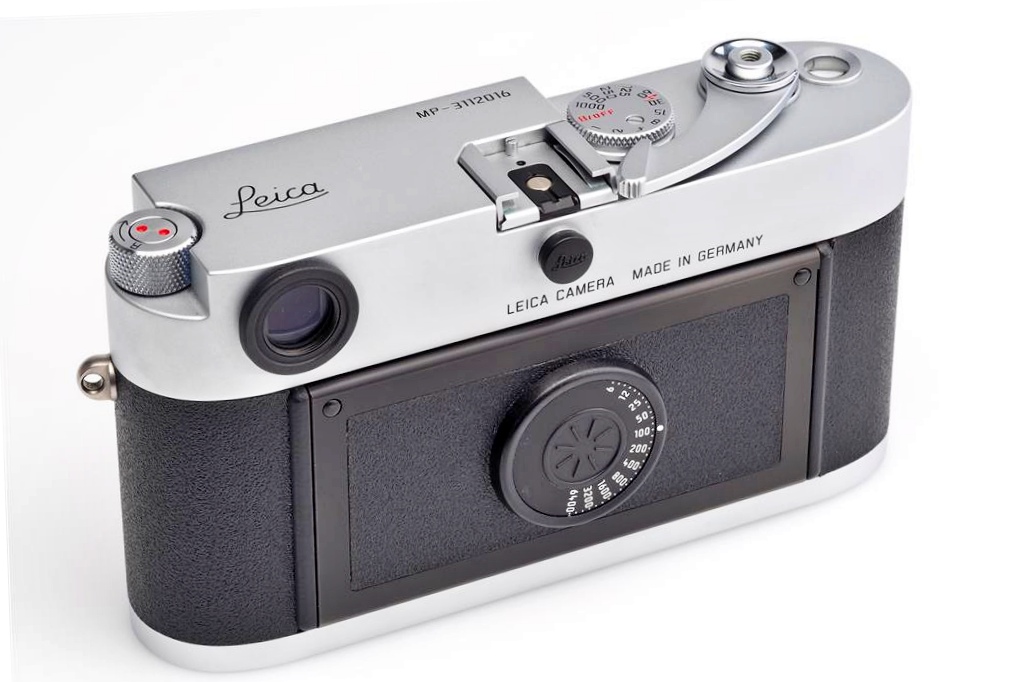
© Jo Geier Mint&Rare
Leica M-A vs Leica M4
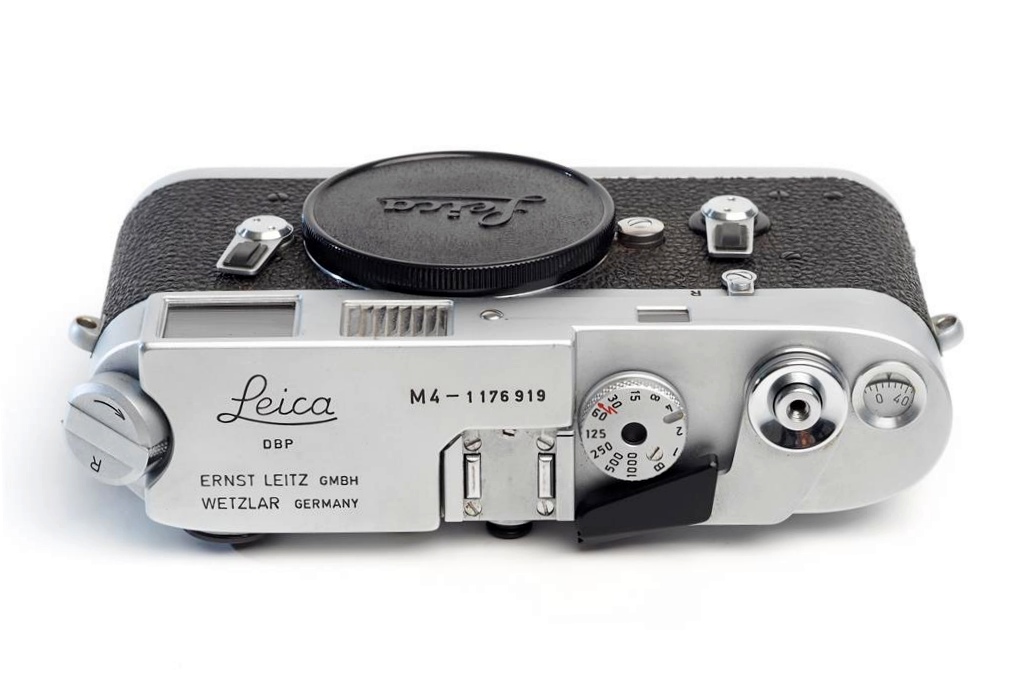
When compared to the Leica M4, the M-A benefits from more modern finder coatings and includes 28mm and 75mm framelines which are absent in the original M4.
At the same time, it retains the mechanical layout and handling that made the M4 popular. The M4 does offer a built-in self timer and a rewind crank for faster film rewind, and earlier examples are sometimes described as slightly over-engineered in terms of construction. The M-A, however, has the advantage of current production tolerances and ongoing factory support.
© Jo Geier Mint&Rare
Leica M-A vs Leica M3
The Leica M3 remains unmatched for 50mm viewfinder clarity due to its 0.91x magnification, and early hand-assembled examples are still known for their smooth mechanical feel.
However, the M-A provides native framelines for 28mm and 35mm lenses without requiring external finders, as well as a modern coated finder that is less prone to flare. It also integrates a hot shoe instead of the M3’s original cold shoe, making flash use more straightforward.
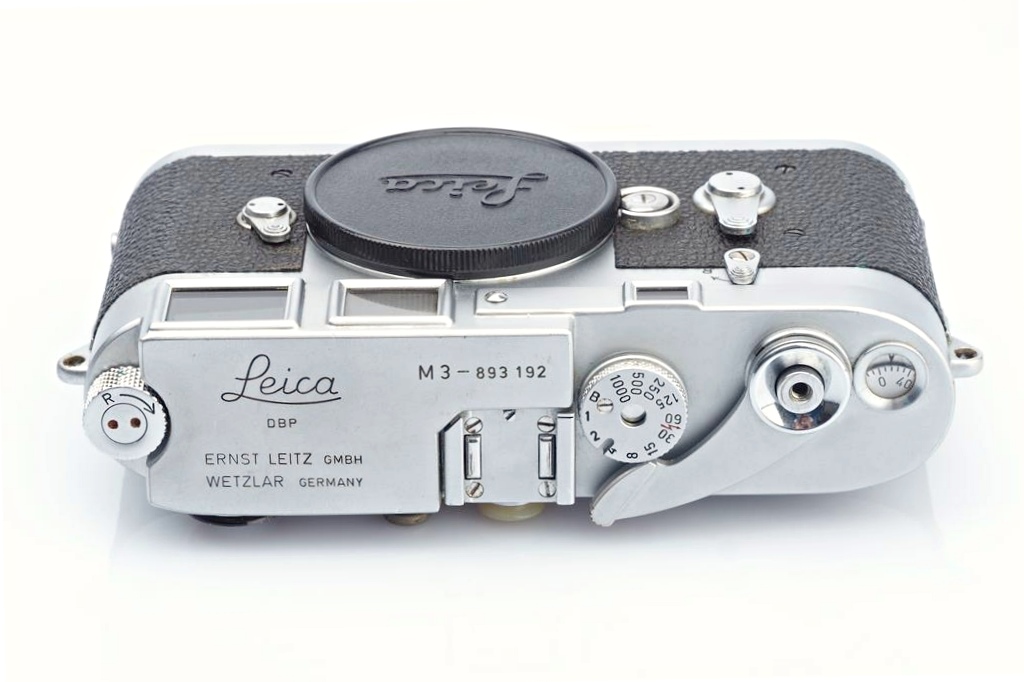
© Jo Geier Mint&Rare
Finish and Exterior Details
The black version of the M-A is finished in black chrome rather than black paint. Black chrome is more resistant to wear, whereas black paint tends to develop brassing over time.
The black chrome M-A also omits the Leica script engraving on the top plate and has no battery cover on the front plate, resulting in a noticeably cleaner appearance compared to the MP.
Position Within Leica’s Production
Within Leica’s overall production, the M-A occupies a rather unusual position. It is fully mechanical, not electronically controlled, not limited in production, and still available new.
It exists alongside digital M bodies such as the M10 and M11, yet avoids electronic integration entirely. For some users, this makes it less of a retro product and more of a contemporary mechanical alternative within the M system.
Use by Contemporary Photographers
Mechanical Leica M cameras have historically been associated with photographers such as Henri Cartier-Bresson, Garry Winogrand, Walker Evans and Inge Morath, who relied on their compact size, quiet shutter and mechanical reliability.
The Leica M-A continues this tradition in contemporary film workflows. Photographers such as Michael Luzzio use the M-A regularly for street photography, while Daniel Hedquist incorporates it alongside digital M bodies like the M11. Juan Glassford has used the M-A extensively while travelling to document environments on film.
Outside of traditional photography, filmmaker Zack Snyder — a long-time Leica collector — has been known to use mechanical M bodies for personal film projects, including modern analogue models. Actor Gary Oldman, who maintains his own darkroom practice, also works with mechanical Leica cameras and has spoken about the tactile qualities of the system.
The continued use of fully mechanical M cameras in contemporary practice reflects a preference for manual exposure control and the tonal characteristics associated with film.
Looking for a Leica M-A, M3, M4 or MP?
At Jo Geier Mint & Rare we work with Leica collectors worldwide.
If you are comparing different mechanical M bodies or looking for a Leica M-A, M3, M4 or MP for your collection, feel free to get in touch:
info@jogeier.com
WhatsApp +43 1 890 4003
https://www.jogeier.com/trade-or-sell
Private inquiries welcome.